
You’ve probably seen vitamin C serums promising brighter skin, fewer dark spots, and a healthier-looking glow. But when you start comparing products, another ingredient keeps appearing alongside vitamin C: ferulic acid. So, what’s the connection?
If you’re dealing with dullness, stubborn acne marks, or early signs of sun damage, the combination might be worth understanding before you spend your money on another serum.
Vitamin C and ferulic acid are both antioxidants, but they do not exactly the same job. Vitamin C supports collagen production and helps address certain pigmentation concerns. Ferulic acid contributes antioxidant activity and can improve the stability of vitamin C in specific formulations.
The most important vitamin C ferulic acid serum benefits include antioxidant support, potential improvement in uneven skin tone, and protection against some of the processes involved in premature skin aging.
Let’s explore how these ingredients work, what the science actually supports, and how to use them without complicating your skincare routine.
What Is Vitamin C + Ferulic Acid Serum?
A Vitamin C + Ferulic Acid Serum is a concentrated facial skincare treatment that pairs vitamin C with ferulic acid. It is a plant-based antioxidant to brighten skin, smooth texture, and protect the skin from oxidative stress.
Oxidative stress occurs when free radicals overwhelm the skin’s natural antioxidant defenses. UV radiation, pollution, and other environmental factors can contribute to this process. Oxidative damage plays a role in changes to skin texture, firmness, and appearance.

What Does Vitamin C Do for Your Skin?
Vitamin C, particularly the form known as L-ascorbic acid, has been studied for its role in maintaining skin health. It provides powerful antioxidant defense, brightens dark spots, and supports collagen production to keep skin firm and healthy.
In a well-formulated topical product, vitamin C may help with:
- Uneven skin tone and some dark spots
- Dull-looking skin
- Certain visible signs of sun-related aging
- Antioxidant protection against environmental stress
However, vitamin C is not automatically effective simply because it appears on a label. Its concentration, chemical form, stability, and ability to penetrate the skin all influence performance.
What Is Ferulic Acid in Skincare?
Ferulic acid is an antioxidant compound found naturally in plants, including rice bran, oats, and various grains. In skincare, it acts as a free-radical scavenger to protect skin cells from environmental damage caused by pollution and ultraviolet (UV) light.
Its main purpose is to help support antioxidant protection.
Why Are Vitamin C and Ferulic Acid Combined?
Vitamin C and ferulic acid are combined in skincare serums because they create a powerful, synergistic effect that improves stability, potency, and skin protection.
In a widely cited 2005 laboratory study, researchers investigated a formulation containing 15% L-ascorbic acid, 1% vitamin E, and 0.5% ferulic acid. The combination showed improved stability and increased protection against experimentally induced UV-related damage.
7 Vitamin C + Ferulic Acid Serum Benefits for Your Skin
The combination has attracted attention because it brings together complementary antioxidant functions. A Vitamin C and ferulic acid serum combines plant-based antioxidants to protect, brighten, and repair the skin. Some benefits have stronger scientific support than others, and it’s worth understanding the difference.

Brightens Dull Complexion
Vitamin C stops excessive melanin production to fade dark spots, hyperpigmentation, and sun damage for a more luminous tone. Vitamin C and ferulic acid can help neutralize free radicals. An antioxidant serum may be a useful complement to everyday sun protection.
May Improve the Appearance of Dark Spots
Dark spots can appear after acne, sun exposure, or other forms of skin inflammation. Vitamin C may help improve uneven pigmentation by influencing melanin-related processes. Both antioxidants neutralize free radicals from UV rays and pollution that cause fine lines, wrinkles, and sagging skin.
Supports Brighter-Looking Skin
A healthy-looking glow isn’t necessarily about making your skin lighter. It’s often about having a more even appearance, comfortable hydration, and less noticeable discoloration. Vitamin C drives collagen synthesis to restore firmness, bounce, and a plumper look to aging skin. Vitamin C can be useful for people concerned about dullness or uneven-looking skin.
Boosts Collagen Production
Collagen helps provide structure and support to the skin. Vitamin C is important for the biochemical processes involved in collagen synthesis. As we age, changes in collagen contribute to fine lines and a loss of firmness. Topical vitamin C may support collagen-related processes and improve some visible signs of photoaging. It is useful about dullness or uneven-looking skin.
Improve the Appearance of Fine Lines
Fine lines have many causes, including natural aging, sun exposure, and dehydration. Vitamin C may help with some signs of photoaging through its antioxidant and collagen-related effects. Ferulic acid may provide additional preventive antioxidant support. Regular use smooths rough skin patches, refines pores, and calms minor redness for a balanced, clear finish. The visible outcome depends on the formula, consistency of use, and the condition of your skin.
Improve the Stability of Certain Vitamin C Formulas
This is one of the most important practical advantages of ferulic acid. L-ascorbic acid is vulnerable to oxidation, which can reduce the quality of a formulation over time. Research suggests that ferulic acid can help stabilize specific combinations of vitamin C and vitamin E. However, stability also depends on the serum’s pH, packaging, solvent system, manufacturing quality, and storage conditions.
Complements a Preventive Skincare Routine
Some skincare ingredients are primarily used to treat a visible concern. Antioxidant can also play a supporting role in protecting skin against certain types of oxidative stress. That makes vitamin C and ferulic acid potentially useful for people interested in maintaining the appearance of healthy skin over time. The most effective preventive routine still starts with daily sunscreen, gentle cleansing, and suitable moisturization.
Vitamin C vs Ferulic Acid: What’s the Difference?
| Feature | Vitamin C | Ferulic Acid |
|---|---|---|
| Ingredient category | Antioxidant | Plant-derived antioxidant |
| Primary skincare role | Antioxidant protection and collagen-related support | Antioxidant support and formulation stabilization |
| Uneven pigmentation | Evidence supports potential improvement | Direct evidence for visible improvement is more limited |
| Fine lines | May improve some signs of photoaging | Mainly supports a preventive antioxidant approach |
| Stability | Some forms, particularly L-ascorbic acid, are unstable | Can improve stability in certain formulations |
| Common combinations | Vitamin E, ferulic acid, hydrating ingredients | Vitamin C and vitamin E |
Is Vitamin C Better With Ferulic Acid?
It can be, depending on the formulation. Research provides a convincing reason to combine them, particularly when vitamin E is also present. But two products with similar ingredient lists may perform differently because of concentration, formulation chemistry, and packaging. Yes, Vitamin C is generally better when paired with ferulic acid because they work together in a powerful skincare partnership.
How to Use Vitamin C + Ferulic Acid Serum Correctly

You don’t need a complicated ten-step routine to use an antioxidant serum. The order of application is generally straightforward.
Step 1: Cleanse Your Face
Wash your face with a gentle, pH-balanced cleanser to remove dirt, oil, and night-time skincare residue. Pat your skin dry (or leave it slightly damp depending on your formula’s instructions).
Step 2: Apply the Serum
Apply the amount of the Vitamin C + Ferulic Acid serum into your fingertips recommended on the product label to clean skin. There’s no need to use extra drops in the hope of getting faster results.
Step 3: Use a Moisturizer
Once your serum has settled, apply a moisturizer suited to your skin. Wait 60 to 90 seconds to let the serum absorb completely and allow your skin’s surface pH to stabilize before moving to the next step. Moisturizer helps maintain hydration and supports the skin barrier.
Step 4: Finish With Sunscreen in the Morning
Finish your morning routine with a broad-spectrum SPF 30 or higher. Vitamin C protects against free radicals, while sunscreen blocks UV rays from hitting your skin. Apply the recommended amount and reapply when outdoors according to sunscreen directions, especially after sweating or swimming.
Simple Morning Routine
| Order | Product | Purpose |
|---|---|---|
| 1 | Gentle cleanser | Remove overnight oil and surface buildup |
| 2 | Vitamin C + ferulic acid serum | Add antioxidant support |
| 3 | Moisturizer | Maintain hydration |
| 4 | Broad-spectrum SPF 30+ | Protect against UV exposure |

How Long Does Vitamin C + Ferulic Acid Serum Take to Work?
This is one of the most common questions people have before buying a serum. But unfortunately, there’s no single timeline that applies to every formula or skin concern.
A hydrating serum may make the skin feel more comfortable relatively quickly, but that effect is not the same as a long-term improvement in pigmentation or photoaging. For dark marks, uneven tone, or fine lines, changes generally require consistent use over several weeks to months.
Some people may notice changes sooner, while others may not see a meaningful difference.
There isn’t strong evidence supporting a guaranteed four-week transformation from every vitamin C and ferulic acid serum. If you’re tracking progress, take occasional photos in similar lighting rather than examining your face every day. And remember that deeper pigmentation concerns may need additional treatment.

Does Vitamin C + Ferulic Acid Serum Have Side Effects?
Many people tolerate antioxidant serums well, but irritation is possible.
Potential reactions include:
- Temporary tingling or stinging: A brief prickling feeling in the first 30 to 60 seconds after application is common, especially with high-strength or low-pH formulas.
- Redness and warmth: Mild flushing or warmth can appear on the cheeks and around the nose.
- Dryness and light flaking: The low pH required for pure L-ascorbic acid can temporarily disturb the skin’s outer barrier during the first week or two.
- Breakouts: Small pimples can occur, though they are usually caused by heavy carrier oils, silicones, or pore-clogging bases in the formula rather than the active ingredients themselves.
- Discoloration: An oxidized serum (turned a dark yellow, orange, or brown color) can leave a temporary yellow-orange cast on the skin or fabric.
These reactions may relate to vitamin C concentration, formulation acidity, fragrance, preservatives, or another component of the product. High acidity and potency of the active ingredients rather than a true allergy. Stop using the serum if irritation is persistent or significant.
How to Patch-Test a New Serum
Before adding a new serum to your face, Dispense a small, coin- or pea-sized amount of the serum to a limited area of intact skin according to the product’s directions. Monitor for irritation over several days. A successful patch test doesn’t guarantee you’ll never react, but it can help identify obvious sensitivity. Avoid patch-testing over broken or actively inflamed skin.
How to Choose a Good Vitamin C + Ferulic Acid Serum
Choosing a good Vitamin C + Ferulic Acid serum requires evaluating the concentration, active form, supporting antioxidants, and packaging. A fancy bottle and a long list of ingredients don’t necessarily indicate an effective formula.
Before buying, look at these details.
- Check the Concentration and Form of Vitamin C
L-ascorbic acid is among the best-studied topical forms. Other derivatives include sodium ascorbyl phosphate, magnesium ascorbyl phosphate, and 3-O-ethyl ascorbic acid. These forms have different stability, penetration, and evidence profiles. Don’t assume they all perform identically.
- Understand Concentration
L-ascorbic acid concentrations around 10–20% are common in many products, butconcentrations above 20% can increase irritation without improving effectiveness. Sensitive skin may tolerate a lower-strength formula more comfortably. Concentration alone can’t tell you whether a product is effective or suitable.
- Look at the Supporting Ingredients
Vitamin E is commonly paired with vitamin C and ferulic acid in antioxidant formulations. Hydrating ingredients may also improve comfort. But don’t judge a product solely by how many actives it contains.
- Inspect the Packaging and Color
Vitamin C products are often sensitive to light, air, and temperature. Opaque, well-sealed packaging and airless dispensers can help limit unnecessary exposure. Choose serums housed in dark amber/brown glass bottles or airless pump dispensers rather than clear droppers.
- Consider Your Skin Type
An effective serum is one you can use consistently without damaging your skin barrier. If a product causes repeated irritation, its ingredient list won’t make it the right choice for you.
How to Store Vitamin C + Ferulic Acid Serum
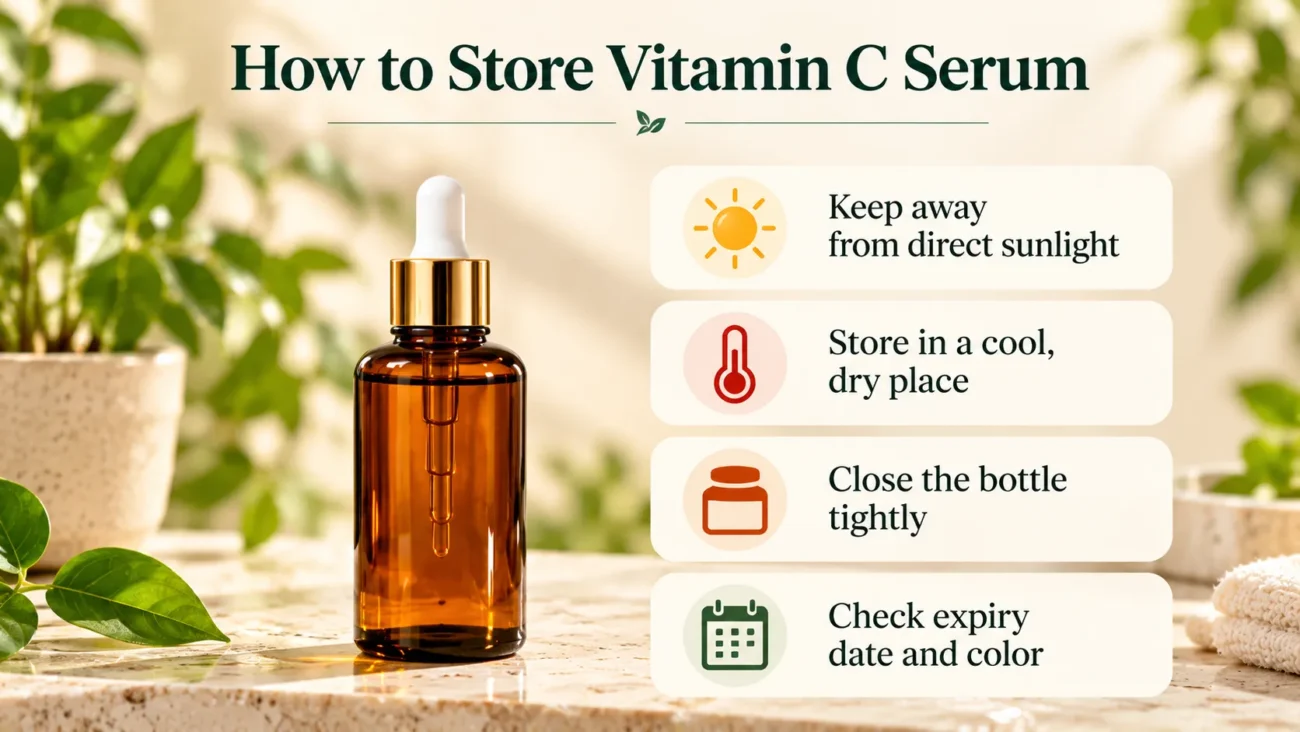
Storage can influence how well certain vitamin C formulas retain their quality. Keep your serum away from direct sunlight and excessive heat. Store your Vitamin C + Ferulic Acid serum in a cool, dark place—such as a bedroom drawer, cabinet, or the refrigerator—to slow down oxidation and preserve its potency. Don’t leave it beside a sunny window or in a hot car.
A serum’s color may naturally vary depending on its ingredients. However, significant darkening, changes in smell, or noticeable changes in texture may indicate that the formula has deteriorated. Check the product’s expiry date and any period-after-opening guidance.
Frequently Asked Questions
What are the main benefits of vitamin C and ferulic acid serum?
The combination provides antioxidant support and may contribute to improved skin tone and the appearance of some signs of photoaging. Ferulic acid can also improve the stability of certain vitamin C formulations.
Does vitamin C with ferulic acid help dark spots?
Vitamin C may gradually improve some types of uneven pigmentation. Ferulic acid adds antioxidant support, but results depend on the formulation and the cause of discoloration. Daily sunscreen is especially important.
Can I use vitamin C and ferulic acid every day?
Many products are intended for daily use, but not everyone tolerates them equally. Follow the label, introduce new products gradually, and reduce use if irritation develops.
Is vitamin C and ferulic acid good for oily skin?
It can be suitable for oily skin when the formulation is comfortable and well tolerated. However, these ingredients are not primary treatments for excess sebum or clogged pores.
Is ferulic acid better than vitamin C?
They have different roles. Vitamin C has stronger evidence for certain pigmentation and collagen-related benefits, while ferulic acid is particularly useful for its antioxidant and formulation-stabilizing properties.
Does ferulic acid make vitamin C more effective?
Research suggests that ferulic acid can improve stability and enhance UV-related antioxidant protection in specific vitamin C and vitamin E formulations. This doesn’t guarantee identical results from every commercial serum.
Can vitamin C and ferulic acid replace sunscreen?
No. Antioxidant serums do not replace broad-spectrum sunscreen. Use SPF 30 or higher and follow appropriate reapplication guidance.
Can I use vitamin C serum with hyaluronic acid?
Yes. Hyaluronic acid is a hydrating ingredient that can complement a vitamin C routine. Apply products according to their individual instructions and use moisturizer as needed.
Is vitamin C and ferulic acid suitable for sensitive skin?
Some sensitive skin types can tolerate carefully formulated products, while others may experience stinging or irritation. Patch-test and consider professional advice if your skin is frequently reactive.
How long does vitamin C and ferulic acid take to brighten skin?
Visible pigmentation improvements may take several weeks to months, and some concerns may require additional treatment. There is no universal result timeline.
What percentage of ferulic acid is effective?
One frequently cited study used 0.5% ferulic acid with 15% L-ascorbic acid and 1% vitamin E. That doesn’t mean 0.5% is necessarily the ideal concentration for every modern formulation.
Should I use vitamin C serum before or after moisturizer?
Serums are generally applied after cleansing and before moisturizer. Follow the product directions if the manufacturer recommends a different order.
Final Thoughts: Is Vitamin C + Ferulic Acid the Right Combination for You?
Vitamin C and ferulic acid aren’t magical ingredients, but they do have a meaningful role in antioxidant skincare. Vitamin C contributes to collagen-related processes and may improve the appearance of uneven skin tone. Ferulic acid provides antioxidant support and can help stabilize certain formulations. Together, they may complement a skincare routine designed around long-term skin health.
Whether you live in the USA, UK, or Pakistan, the fundamentals remain the same: protect your skin from excessive sun exposure, choose products that suit your skin type, and keep expectations realistic. A good skincare routine doesn’t need to be complicated. It needs to be comfortable, consistent, and built around what your skin actually needs.