Blog
Best Skincare Routine for Oily Skin That Actually Controls Shine


You wash your face in the morning, apply your favorite skincare products, and leave home feeling fresh. A few hours later, your forehead looks shiny, your nose feels greasy, and your makeup has started sliding around. Oily skin can feel like a constant battle, especially when you are also dealing with enlarged-looking pores, blackheads, acne, or stubborn bumps. You need Best Skincare Routine for Oily Skin for this problem. But here’s something worth knowing: oily skin doesn’t need to be stripped of every drop of oil to look healthy. It needs a good routine that removes excess sebum without disrupting the skin’s protective barrier.
The best skincare routine for oily skin is simple: use a gentle cleanser, choose lightweight hydration, add targeted ingredients when needed, and finish your morning routine with sunscreen. At night, focus on removing buildup and treating specific concerns without overloading your skin.
This guide explains exactly how to build that routine, what ingredients are worth considering, which habits can make oily skin harder to manage, and how to handle common problems such as acne, clogged pores, uneven texture, and midday shine.
Why Does Your Face Produce So Much Oil?
Your skin contains tiny glands called sebaceous glands. These glands produce sebum, a natural oily substance that helps protect and lubricate your skin. Sebum is not your enemy. In fact, your skin needs it.
The trouble starts when your sebaceous glands produce more oil than your skin needs. That extra sebum can create a greasy appearance, around the forehead, nose, and chin area commonly called the T-zone.
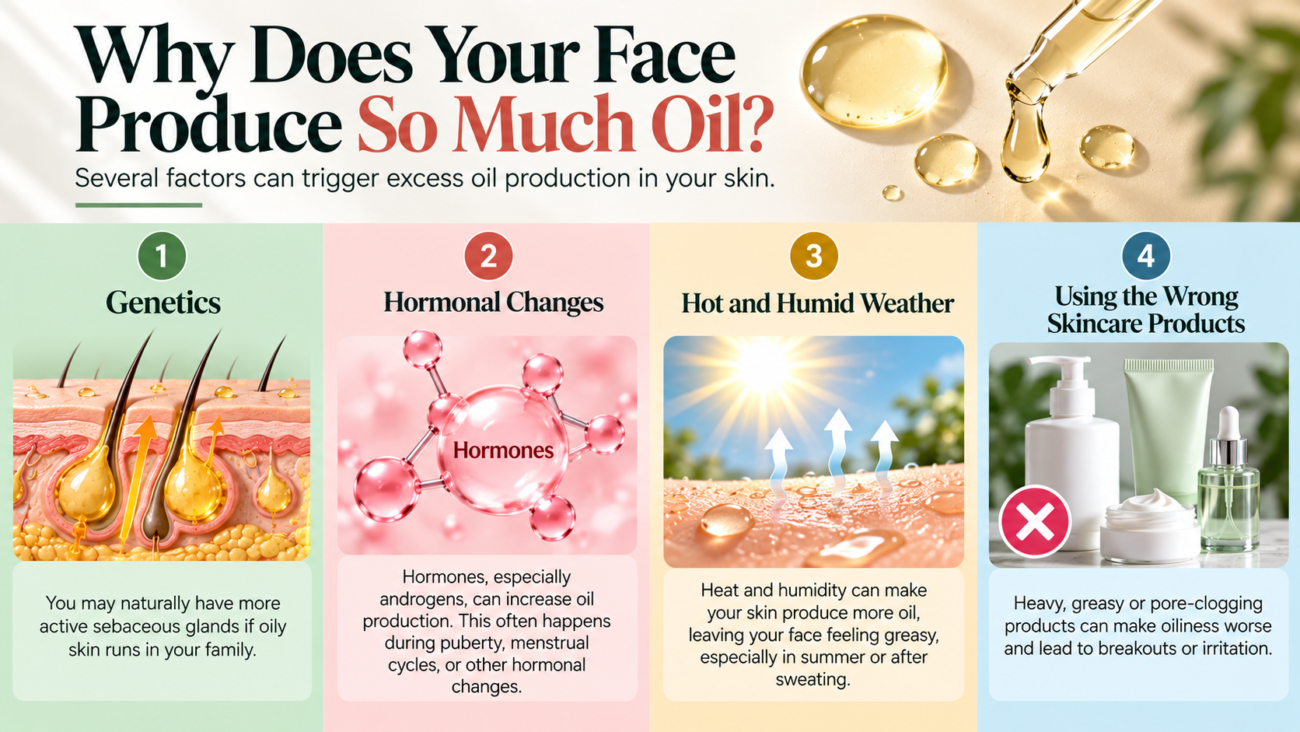
Severak factors can influence how oily your skin becomes:
- Genetics
Some people naturally have more active sebaceous glands. If oily skin runs in your family, you may be more likely to experience it yourself.
- Hormonal Changes
Hormones, particularly androgens, influence oil production. This helps explain why oily skin and acne may become more noticeable during puberty or periods of hormonal change.
- Hot and Humid Weather
When the weather is humid, sweat can mix with sebum and make your skin feel even greasier. This is especially frustrating during hot summers or after spending time outdoors.
- Using Products That Don’t Suit Your Skin
Heavy formulations may feel uncomfortable on an already oily face. Some products can also clog pores or cause irritation, depending on their ingredients and your individual skin.
- Washing Your Face Too Aggressively
A strong cleanser might leave your face feeling squeaky clean, but that tight sensation isn’t necessarily a sign of healthier skin.
Over-cleansing can irritate or dry out your skin. It is better to control surface oil while maintaining your natural skin barrier.
How to Tell Whether You Have Oily Skin?
Before buying an entire skincare collection, make sure you understand your skin type.
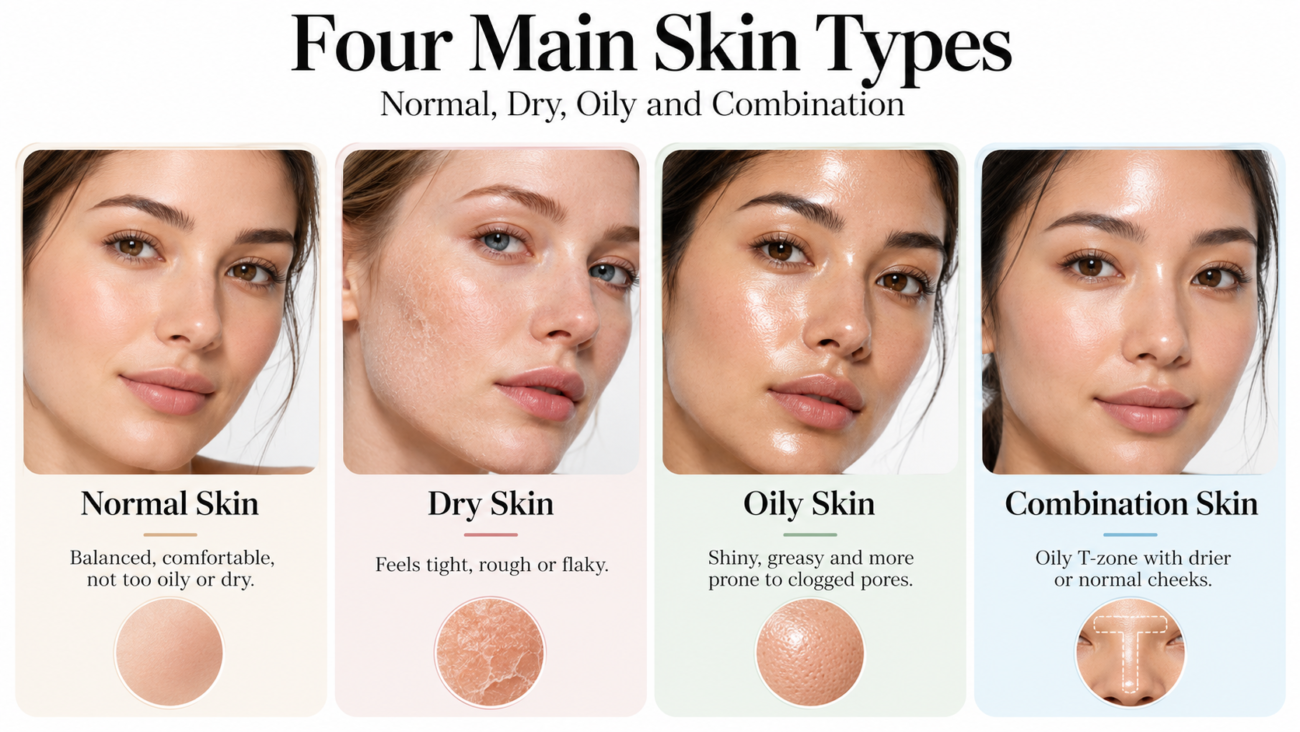
Try this simple observation test. Wash your face with a gentle cleanser and pat it dry. Avoid applying products for about 30 minutes, provided your skin remains comfortable. Then examine your forehead, cheeks, nose, and chin.
- Oily skin: Most of your face appears shiny or feels greasy.
- Combination skin: Your forehead, nose, and chin are oily, but your cheeks feel normal or dry.
- Dry skin: Your face feels tight, rough, or flaky, with little visible oil.
- Normal skin: Your face feels relatively balanced without significant dryness or excess shine
This is an informal guide about your skin type. Your skin can also change with the season, age, medications, and skincare habits. And know, oily skin can still become dehydrated or irritated.
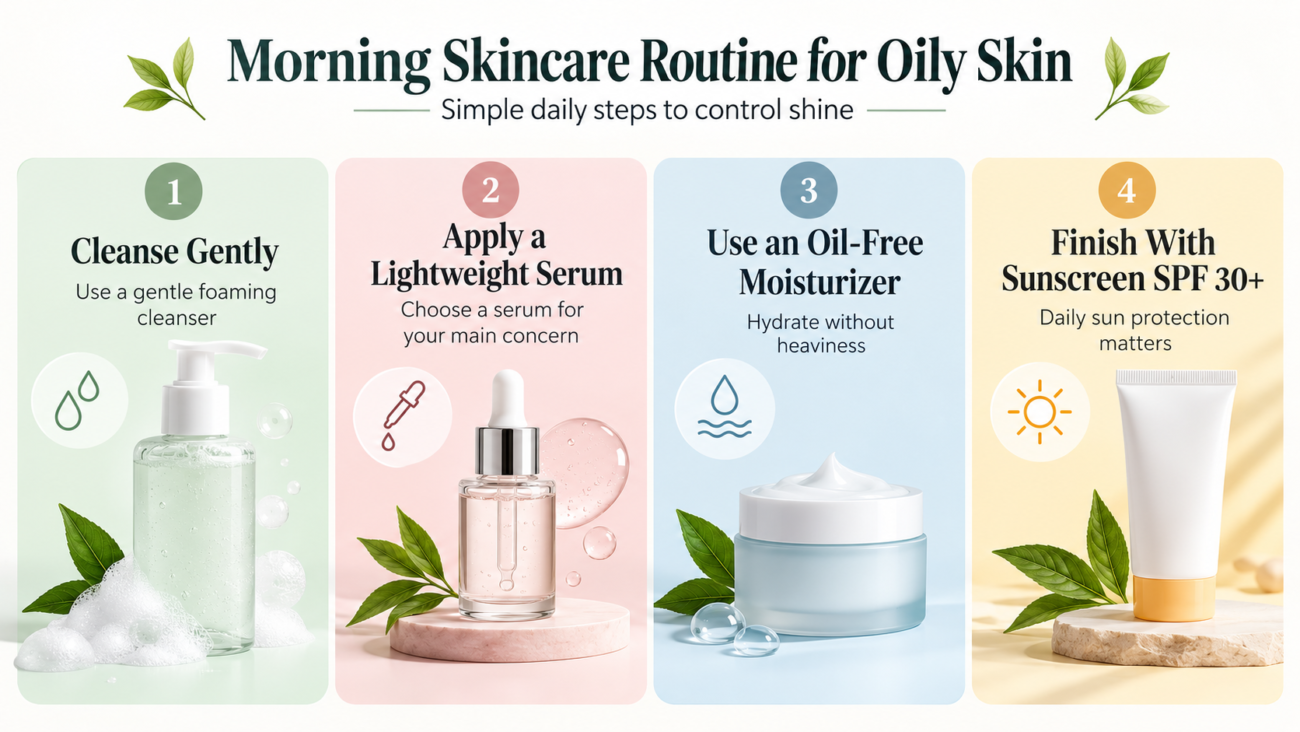
Best Morning Skincare Routine for Oily Skin
Your morning routine should prepare your skin for the day without leaving behind a heavy, greasy finish. Don’t need eight expensive products. Start with four manageable steps.
Wash Face With a Gentle Foaming Cleanser
A good cleanser removes dirt, oil, and makeup while preserving the skin’s natural moisture barrier without causing tightness or irritation. Massage the cleanser onto your face with lukewarm water using your fingertips. Rinse thoroughly and pat dry with a clean towel. It helps leave skin looking healthy, balanced and naturally glowing. Look for a gentle gel or foaming cleanser labeled:
- Oil-free
- Non-comedogenic
- Suitable for oily or acne-prone skin
- Fragrance-free, especially if your skin is sensitive
Helpful tip: If your face feels uncomfortably dry after washing, your cleanser may be too harsh. Not suitable your skin type.
Use A Lightweight Serum for Your Skin
If shine is your biggest concern, use a lightweight, water-based, non-comedogenic serum containing niacinamide, salicylic acid, or hyaluronic acid to control excess sebum and hydrate oily skin without clogging pores. Niacinamide helps regulate sebum production, minimize the appearance of pores, and calm redness. Best serums for oily skin are niacinamide and salicylic acid (BHA), as they directly control excess sebum.
- Controls oil
- Tightens pores
- Calms redness
- Builds skin strength
Use Your Favourite an Oil-Free Moisturizer
An oil-free moisturizer is a lightweight, water- or gel-based hydrator designed to moisturize the skin without adding extra oils or clogging pores. It also helps support the skin barrier and reduces the uncomfortable dryness that sometimes comes with acne treatments and foaming cleansers. Oil-Free Moisturizer absorbs quickly, controls shine, and keeps your skin soft. Look for ingredients such as:
- Glycerin: Helps attract water to the skin.
- Hyaluronic acid: Supports surface hydration.
- Ceramides: Help maintain the skin’s protective barrier.
- Panthenol: Supports skin conditioning and moisture retention.
Use Best Broad-Spectrum SPF 30
If there’s one morning step you shouldn’t skip, it’s sunscreen. Sun exposure contributes to premature skin aging, sunburn, and skin cancer. It can also make post-acne dark spots more persistent. Choose broad-spectrum SPF 30 or higher and water resistance, especially for outdoor activities. It blocks about 97% of UVB rays and protects against both UVA and UVB radiation.
- Sunburn Protection
- Aging and DNA Damage
- Complete Defense
- Health Benefits
Skincare Routine for Oily Skin
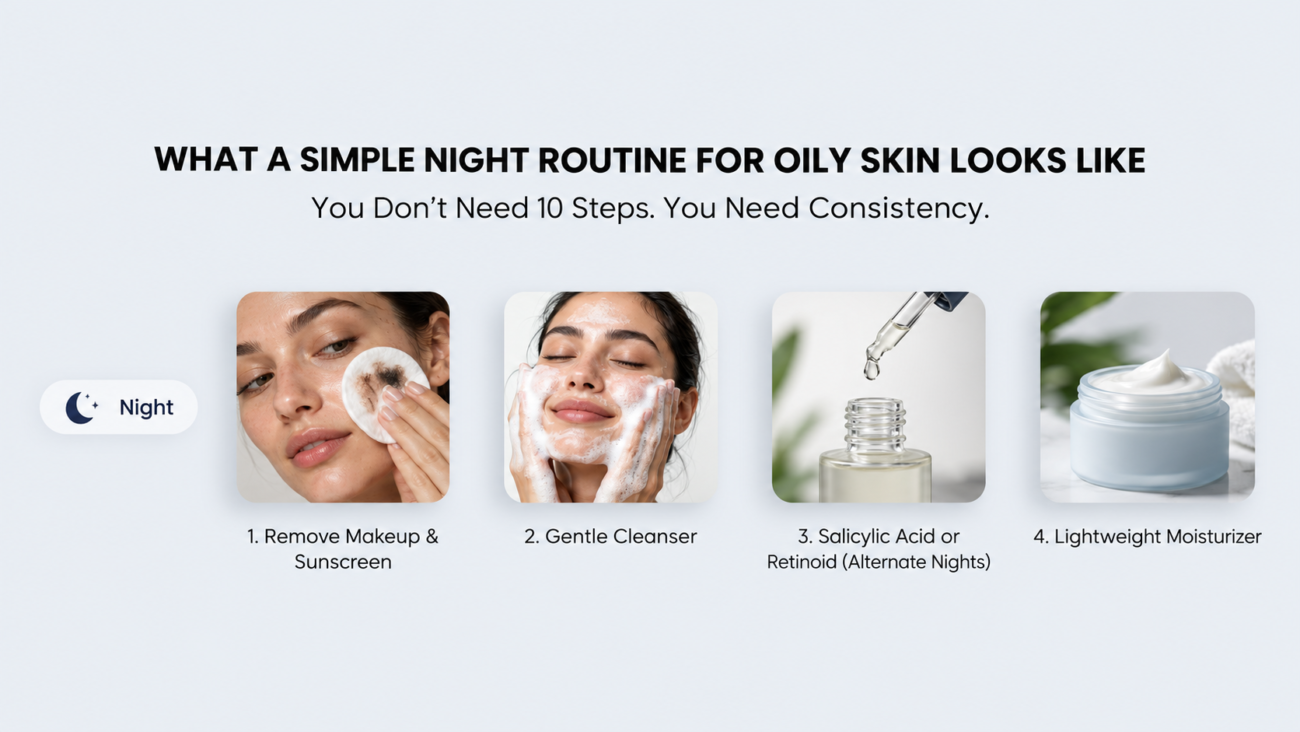
Best Night Skincare Routine for Oily Skin
Your evening skincare routine has a different purpose. By the end of the day, your face may have accumulated sunscreen, makeup, sweat, excess oil, and environmental particles. The goal is to remove that buildup and address your main skin concern without damaging your moisture barrier.
Step 1: Remove Makeup and Sunscreen on Your Face
If you wear makeup or a water-resistant sunscreen, thoroughly remove it before bed. A suitable micellar water or makeup remover can help break down stubborn products. Some people prefer an oil cleanser or cleansing balm followed by a gentle water-based cleanser. That can work for oily skin too, provided the products rinse away comfortably and don’t aggravate breakouts.
- Prevents Clogged Pores
- Stops Dullness and Irritation
- Improves Skincare Absorption
Step 2: Cleanse Without Scrubbing
You can cleanse your face effectively without scrubbing by using gentle, non-abrasive techniques and mild products that protect your skin barrier. Take your time around your nose, hairline, and jaw, where makeup or sunscreen may collect. Avoid rough washcloths and excessively hot water. Your skin should feel clean, not raw.
Step 3: Apply a Targeted Treatment
This step depends on what you are trying to improve. Start with one treatment, follow its instructions, and increase frequency only as tolerated. Retinoids should generally be avoided during pregnancy or when planning pregnancy unless a qualified clinician specifically advises otherwise.
- Blackheads and Whiteheads: Salicylic acid can help clear clogged pores.
- Inflamed Pimples: Benzoyl peroxide may help reduce acne-causing bacteria.
- Persistent Comedonal Acne: A topical retinoid such as adapalene may be helpful.
- Acne with Lingering Dark Marks: Azelaic acid may address both blemishes and post-acne discoloration.
Step 4: Moisturize Before Bed
Even if your face feels oily, don’t automatically skip the moisturizer. Acne treatments can dry out the skin, leading to flaking, irritation, and sensitivity. Use a comfortable non-comedogenic moisturizer to help maintain hydration. For some people, a light gel is enough. Others need a slightly richer lotion at night, particularly when using a retinoid. The best nighttime routine is the one your skin can tolerate consistently.
Skincare Routine for Oily Skin
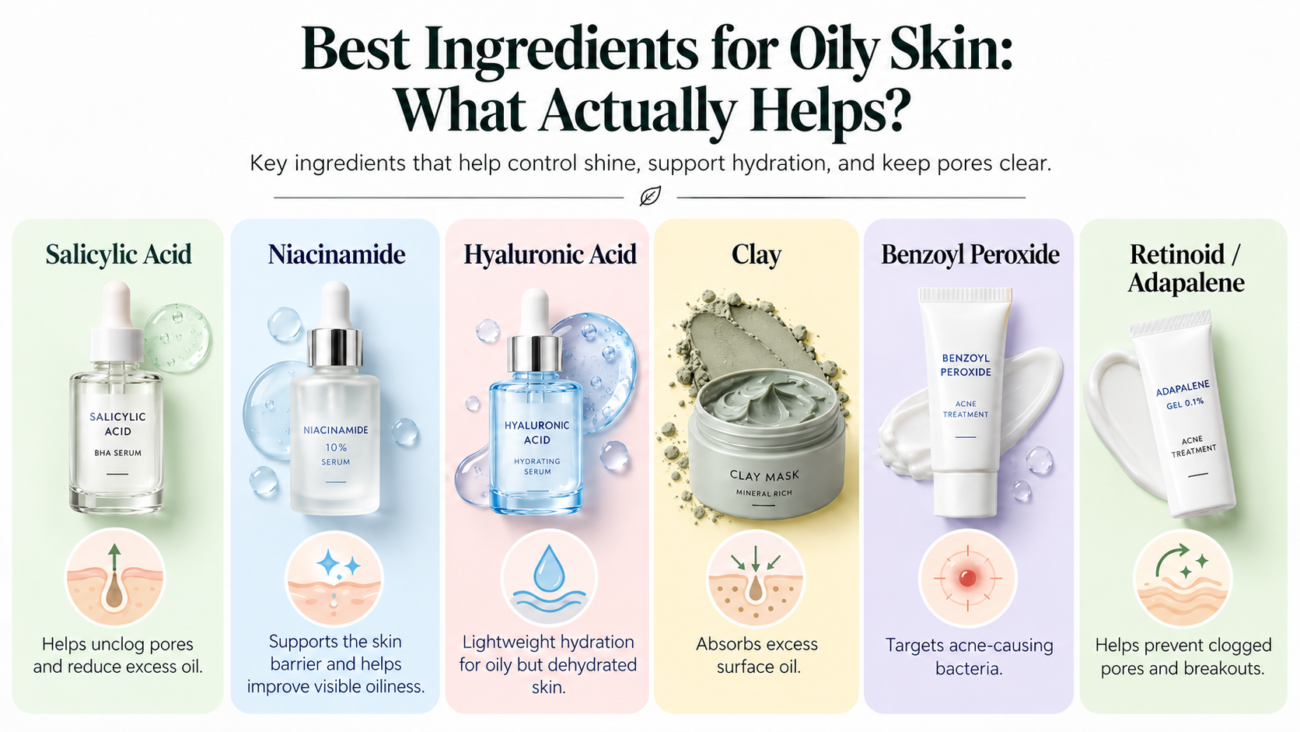
Best Ingredients for Oily Skin: What Actually Helps?
Skincare ingredients can become confusing when every serum promises smaller pores, instant glow, or permanent oil control. Instead of following trends, choose ingredients according to the problem you’re trying to solve.
| Ingredient | Main Benefit | Best Suited For |
|---|---|---|
| Salicylic acid (BHA) | Helps unclog pores and exfoliate | Blackheads, whiteheads, congested skin |
| Niacinamide | Supports barrier function; may improve visible oiliness | Shine, uneven appearance, barrier support |
| Hyaluronic acid | Helps hydrate skin without requiring a heavy texture | Oily but dehydrated skin |
| Ceramides | Support the protective skin barrier | Irritated or treatment-dried skin |
| Benzoyl peroxide | Reduces acne-causing bacteria | Inflammatory acne |
| Adapalene | Helps prevent clogged pores and treat acne | Persistent blackheads, whiteheads, and pimples |
| Azelaic acid | Helps with acne and post-acne marks | Blemishes and uneven tone |
| Glycerin | Attracts and retains moisture | Everyday hydration |
Is Salicylic Acid Good for Oily Skin?
Yes, salicylic acid is an excellent ingredient for oily skin. Salicylic acid is an oil-soluble beta hydroxy acid that helps exfoliate inside clogged pores. You can find it in cleansers, leave-on treatments, and some moisturizers. You can find it in cleansers, leave-on treatments, and some moisturizers. If you’re new to it, begin cautiously and follow the product label. Using it too frequently can cause dryness, stinging, or irritation.
Does Niacinamide Reduce Oil Production?
Yes, niacinamide (vitamin B3) reduces and regulates oil (sebum) production in the skin. Niacinamide is a useful skincare ingredient. It can support the skin barrier and may help improve visible oiliness in some people. It does not permanently turn off your sebaceous glands. A modest-strength formula is a sensible starting point, especially for sensitive skin. Higher concentrations aren’t automatically better.
Is Hyaluronic Acid Suitable for Oily Skin?
Yes, hyaluronic acid is very good for oily skin. Hyaluronic acid is a lightweight humectan, meaning it helps attract and hold water. Oily skin can still lack adequate hydration, so a lightweight hydrating formula can improve comfort without needing a thick, greasy finish. It pairs well with harsh acne treatments to soothe tightness and flakiness.
Common Oily Skin Problems
Having oily skin doesn’t automatically mean you’ll develop acne. However, excess sebum can contribute to certain skin concerns. The right approach depends on the problem.
- Your Face Gets Shiny Shortly After Washing
- Enlarged or Visible Pores
- Blackheads Around the Nose
- Whiteheads and Small Forehead Bumps
- Painful Pimples and Repeated Breakouts
- Oily Skin That Still Feels Tight or Flaky
- Acne Marks and Uneven Skin Tone
- Makeup Separates or Slides Off
- Oily Skin With Red, Greasy Flakes
- Oily Skin With Hormonal Acne
Weekly Skincare Routine for Oily Skin
A weekly routine should support your everyday skincare, not overwhelm it.
| Day | Morning | Evening |
|---|---|---|
| Monday | Cleanser, moisturizer, SPF | Cleanser, moisturizer, chosen treatment if scheduled |
| Tuesday | Cleanser, moisturizer, SPF | Cleanser, moisturizer |
| Wednesday | Cleanser, moisturizer, SPF | Cleanser, moisturizer, chosen treatment if scheduled |
| Thursday | Cleanser, moisturizer, SPF | Cleanser, moisturizer |
| Friday | Cleanser, moisturizer, SPF | Cleanser, moisturizer, chosen treatment if scheduled |
| Saturday | Cleanser, moisturizer, SPF | Gentle cleansing and moisturizing |
| Sunday | Cleanser, moisturizer, SPF | Simple hydration-focused routine |
Skincare Mistakes That Can Make Oily Skin Harder to Manage
Sometimes the biggest improvement comes from removing unnecessary steps rather than buying another product.
Washing Your Face Four or Five Times a Day
Repeated cleansing can cause dryness and irritation. For most people, cleansing up to twice daily and after heavy sweating is enough.
Skipping Moisturizer
Oily skin isn’t the same as fully hydrated skin. An appropriate moisturizer can help protect the skin barrier.
Using Alcohol-Based Products
A product that burns isn’t necessarily working better. Avoid harsh, irritating formulas, especially if your skin is already sensitive.
Exfoliating Every Time You See Shine
Exfoliation targets dead skin cells and pore congestion. It doesn’t need to be repeated whenever oil appears. For everyday shine, blotting paper is a gentler option.
Applying Too Many Active Ingredients Together
A salicylic acid cleanser, exfoliating toner, benzoyl peroxide treatment, and retinoid may be more than your skin can tolerate. Introduce treatments gradually and avoid unnecessary overlap.
Sleeping With Makeup
Leaving makeup and sunscreen on overnight can contribute to buildup and may aggravate breakouts. Cleanse before bed, even when you’re tired.
Does Diet Affect Oily Skin and Acne?
Food and skin health have a more complicated relationship than many beauty trends suggest. Some studies have found links between acne and high-glycemic dietary patterns. Cow’s milk may also be associated with acne in some individuals. However, that doesn’t mean eating one particular food directly causes oily skin, or that eliminating entire food groups will solve your breakouts. A balanced diet, sufficient sleep, and managing stress are reasonable habits for overall health. If you think a specific food consistently affects your acne, keep track of your symptoms and discuss persistent concerns with a healthcare professional.
How Long Does It Take to See Results?
It depends on the result you’re looking for.
A mattifying skincare product or blotting paper may reduce visible shine immediately, but that effect is temporary.
Hydrating skincare may improve comfort within days, while improvements in acne and clogged pores usually require more patience.
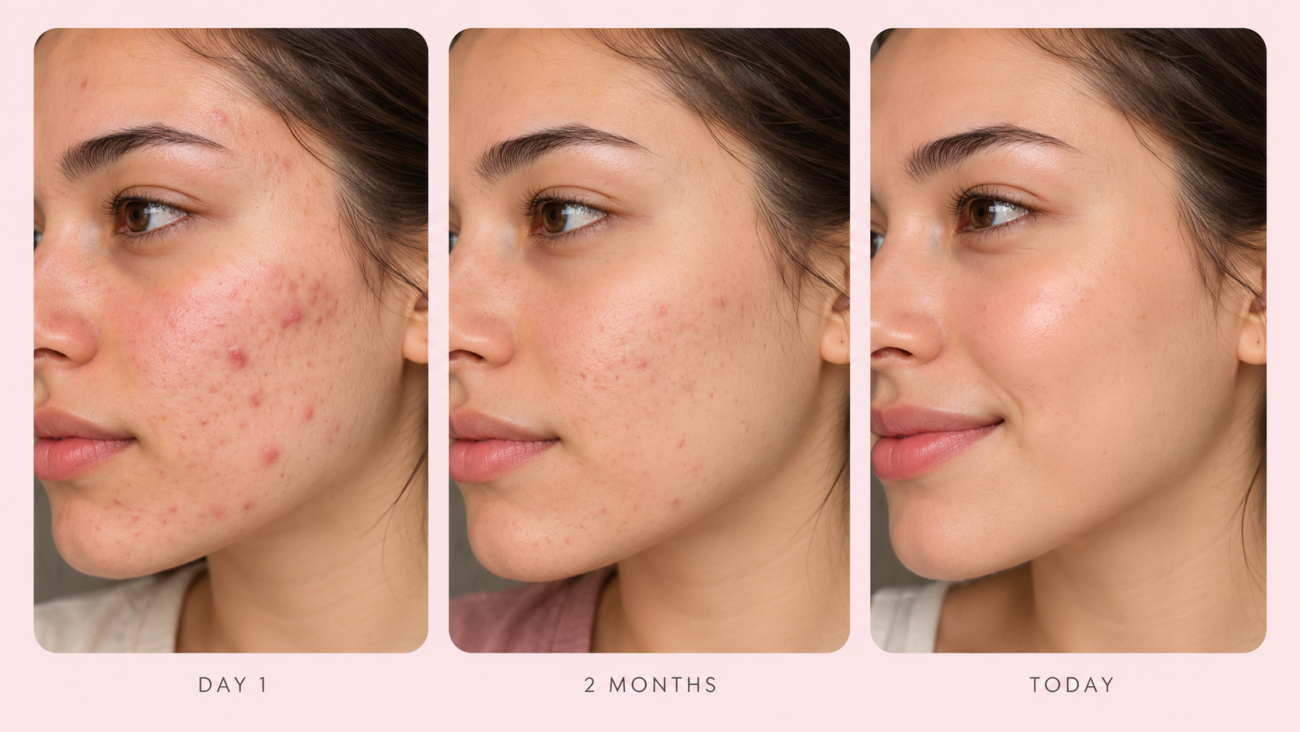
Many acne treatments need approximately six to eight weeks before meaningful improvement becomes apparent. Some treatment plans take longer.
Don’t judge an acne treatment after only two or three nights.
Take progress photos under similar lighting if that helps you track your skin, but avoid checking every tiny change throughout the day.
Consistency matters more than constantly replacing products.
When Should You See a Dermatologist?
Not every oily-skin concern requires a medical appointment. However, professional advice is worthwhile if you experience:
- Deep, painful, or recurring cystic acne
- Breakouts that are leaving scars
- Persistent redness, burning, itching, or scaling
- Acne that doesn’t improve with appropriate over-the-counter care
- Sudden, significant changes in oiliness with other hormonal symptoms
- Significant emotional distress related to your skin
A dermatologist can help determine whether you’re dealing with ordinary oily skin, acne, seborrheic dermatitis, contact irritation, or another condition.
Frequently Asked Questions About Oily Skin?
What is the best daily skincare routine for oily skin?
The best daily skincare routine for oily skin focuses on gentle cleansing, oil regulation, lightweight hydration, and daily sun protection.
How can I stop my face from getting oily so quickly?
You may not be able to stop natural sebum production, but you can manage the appearance of shine. Try a gentle cleanser, lightweight skincare, non-comedogenic sunscreen, and blotting papers during the day. Avoid repeatedly washing your face.
Should I use moisturizer if I have extremely oily skin?
Yes, you should still use a moisturizer even if you have extremely oily skin. Choose a light, oil-free, non-comedogenic formula that feels comfortable on your skin.
Is niacinamide or salicylic acid better for oily skin?
Both serve different purposes. Niacinamide supports the skin barrier and may help improve visible oiliness. Salicylic acid is more directly useful for blackheads, whiteheads, and clogged pores.
Can oily skin become dry or dehydrated?
Yes, oily skin can become dehydrated, though it rarely turns into a true “dry” skin type. Your face can produce plenty of sebum while still feeling tight, flaky, or irritated. A gentle cleanser and suitable moisturizer can help.
Does drinking more water reduce oily skin?
Drinking enough water is important for overall health. But no, drinking more water does not directly reduce or control oily skin. Topical skincare and appropriate acne treatments are more useful for managing oiliness.
What is the best sunscreen for oily and acne-prone skin?
The best sunscreens for oily and acne-prone skin feature oil-free, non-comedogenic, and mattifying or fluid-gel formulas that will not clog pores or cause extra shine.
How many weeks should I follow a routine before changing products?
You should follow a skincare routine for at least 4 to 12 weeks before deciding to change or judge your products, depending on the product type and your skin’s biological cycle.
Final Thoughts
The best skincare routine for oily skin isn’t the one with the most products, the strongest cleanser, or the highest concentration of active ingredients. It’s the one that helps your skin feel comfortable, keeps your pores from becoming unnecessarily congested, and addresses breakouts without constant irritation. Start with gentle cleansing, lightweight hydration, and daily sun protection. Add a targeted treatment only when there’s a specific reason to use it. And don’t be discouraged when some shine returns during the day. Healthy skin naturally produces oil. The goal isn’t to make your face completely oil-free. It’s to find a sustainable balance that works for your skin, your budget, and your everyday life.